
What is social proof in marketing?
Social proof is a psychological phenomenon where individuals mimic the actions of others to determine correct behavior. In marketing, it serves as a trust signal, validating a brand or product by showcasing evidence that others have already purchased, used, and approved of it.
Why it matters:
- 91% of consumers read online reviews to learn about local businesses, with 42% doing so regularly. (Influencer Marketing Hub)
- 88% of Gen Z and Millennials use social media to research products they’re interested in buying. (Exploding Topics)
- User-generated content (UGC) is considered the most authentic form of content by 60% of consumers.(Wiser Notify)
- 75% of marketers believe that user-generated content enhances their marketing effectiveness.(SMB Guide)
- 92% of consumers hesitate to make a purchase if there are no customer reviews available. (Exploding Topics)
- Influencer marketing content achieves more than 8x the engagement rate of content shared directly by brands. (OptinMonster)
- Displaying reviews can increase conversion rates by up to 270%. (Trustmary)
- 72% of consumers say positive reviews and testimonials increase their trust in a business. (Wiser Notify)
- Displaying user-generated photos can increase conversion rates by up to 29%. (Trustmary)
- Displaying the number of customers or social media followers can increase conversion rates by up to 15%. (Trustmary)
These statistics underscore the significant role that social proof plays in influencing consumer behavior and enhancing marketing strategies.
Want the full playbook? Dive into our Ultimate Guide to Social Proof Marketing to explore the psychology behind social proof, nine proven tactics, and real‑world case studies you can steal today.
What are the different types of social proof?
There are six primary categories of social proof used in e-commerce:
- Customer (reviews/UGC),
- Expert (industry leaders),
- Celebrity (influencers),
- Crowd (popularity stats),
- Friends (referrals), and
- Certification (badges).
Each type leverages a specific form of authority to reduce purchase anxiety and build credibility.
Comparison of Social Proof Types
| Social Proof Type | Best For | Example |
| Power in Numbers | High-traffic sites | “Bought by 5,000 people this week” |
| People’s Choice | Bestsellers | “Rated #1 by our community” |
| Expert Endorsements | B2B & Technical products | “Certified by the Dental Association” |
| User Content (UGC) | Fashion & Lifestyle | Customer photos on Instagram |
| Scarcity/Urgency | Sales & Limited Drops | “Only 3 left in stock” |
Effective Social Proof Strategies: Real-Life Examples from Top Brands
In this post, you’ll discover hand fulls of social proof examples from top websites leveraging social proof to build trust and encourage sales.
When used thoughtfully, social proof is a powerful marketing tool. In physical stores, the presence of other shoppers subtly influences us, but online, social proof needs to be more intentional.
If you run an ecommerce business, strategically displaying social proof—like reviews, endorsements, or recent purchases—can make a significant difference.
To see how each type of social proof uniquely impacts consumer trust, let’s dive into examples from top brands.
How can numerical data be used as social proof?
Numerical social proof leverages “wisdom of the crowd” by displaying real-time metrics like active visitors, recent sales, or total subscriber counts. This quantifies popularity, triggering a psychological “fear of missing out” (FOMO) that compels new visitors to follow the majority’s behavior
Grant Cardone: Real-Time Sales Counters
Grant Cardone uses a dynamic counter on his landing pages to display total book sales from the last 3 hours.
- Why it works: It signals to sales professionals that their peers are actively investing in this resource right now, creating an immediate fear of being left behind (FOMO).
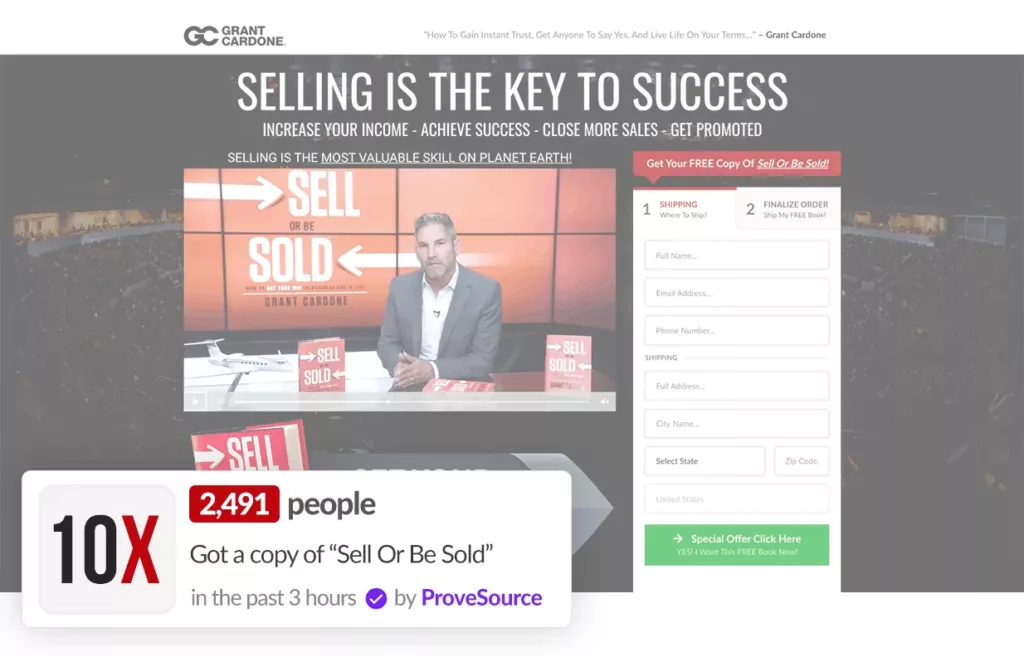
So in this scenario, ProveSource’s notifications influence customers through FOMO.
Woodmart
Woodmart offers another great example of social proof, but this time focused on a specific product.
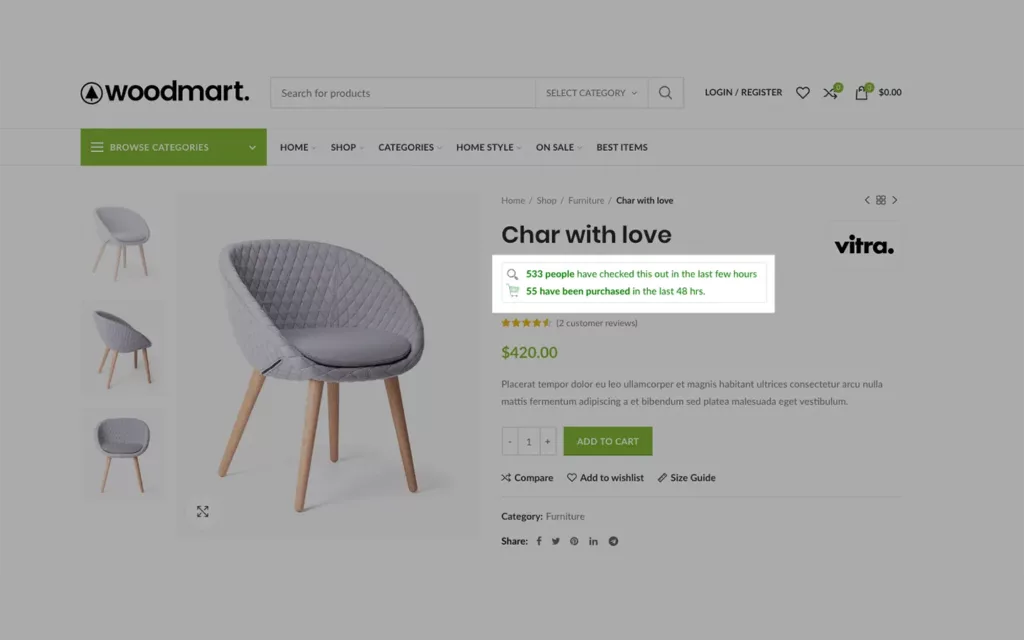
They not only display the number of purchases but also track how many homeowners have shown interest in the product by viewing it. A high number of views suggests the product is widely considered attractive and desirable, giving potential buyers more confidence in their decision. Customers can feel assured that adding this product to their home will likely result in positive feedback.
Booking.com: Recent Activity Notifications
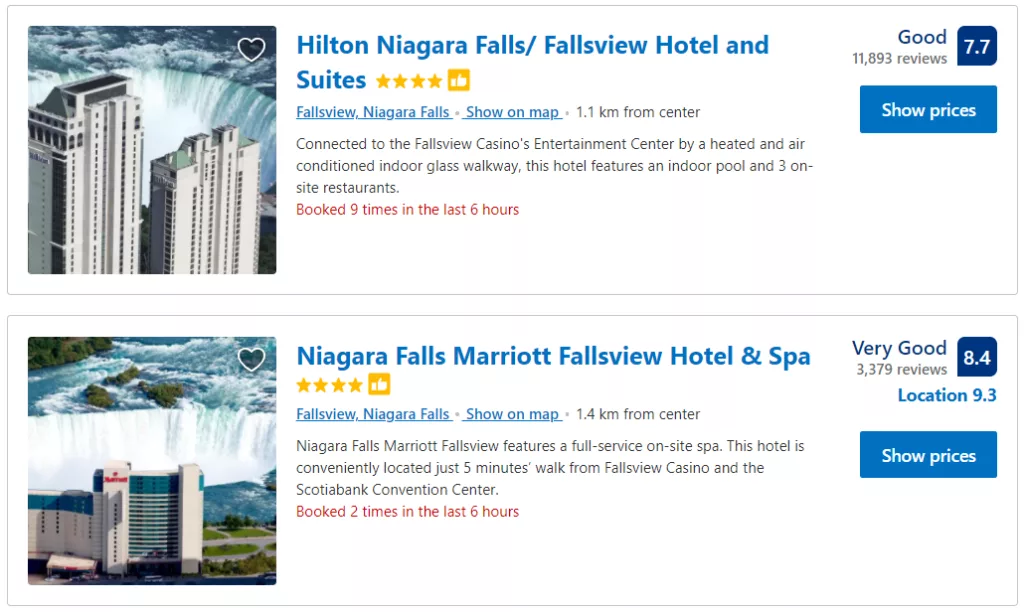
Booking.com displays red notification text such as “Booked 15 times in the last 6 hours” or “34 people are looking at this property.”
- Why it works: It combines Power in Numbers with Scarcity. The high viewer count vs. limited room availability forces users to make faster decisions to avoid losing the deal.
Etsy
Displays “In 20 other people’s carts” directly near the checkout button. This turns other shoppers into competitors, accelerating the checkout process.

Udemy: Massive User Bases
Udemy showcases the sheer scale of their student base (e.g., “124,500 students enrolled”).
Why it works: Large numbers act as a safety net. A potential student reasons, “If 100,000+ people took this course, it must be legitimate.”

Customer Success Spotlight
Andrew Mellen, Founder & CEO of Andrew Mellen Inc., knew that social proof could help build trust with his website visitors. After trying several platforms and being left unsatisfied, Andrew turned to ProveSource.
“We wanted something stable, attractive, and easy to try for free. ProveSource delivered exactly that.”
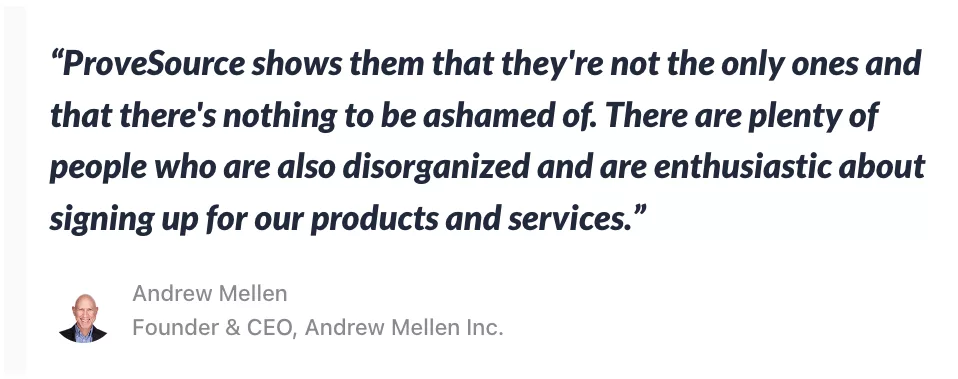
Andrew found that showing real-time notifications of others signing up for his programs helped hesitant visitors overcome their fears. ProveSource proved that they weren’t alone in needing guidance.
“ProveSource shows visitors that they’re not the only ones who are disorganized and that there’s nothing to be ashamed of. It gives them the confidence to sign up.”
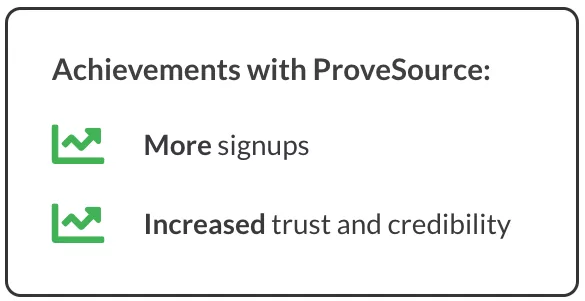
Since installing ProveSource, Andrew has seen an increase in both free signups and paid program enrollments. The crowd mentality and urgency created by real-time notifications have made decision-making easier for his visitors.
Bestseller Social Proof
The Helm
Your best-selling products are a creative way to flex your social proof. The “Bestseller” title tells customers that a product is well-loved and desirable just like a strong stamp of approval.
They’re especially great for first-timers who may need a starting point among all the products available on a particular store.

The Helm (leather bags and goods retailer) does it with their best-selling bags. With so many options, a new buyer may feel lost with all the options in front of them. With this social proof popup, they’re shown the common picks that satisfy most customer needs.
How do reviews and testimonials increase conversions?
Reviews and testimonials provide qualitative proof that helps users visualize themselves using a product. Unlike raw data, testimonials offer relatable narratives and specific use-cases, which are essential for building emotional connections and addressing specific customer objections before purchase.
The Gamesmen Case Study
Australian retailer The Gamesmen placed hyperlinks to their “Reviews & Testimonials” page inside real-time social proof popups.
The Stat: 72% of customers will not take action until they read reviews.
The Result: Users could instantly verify the quality of the service while browsing products.
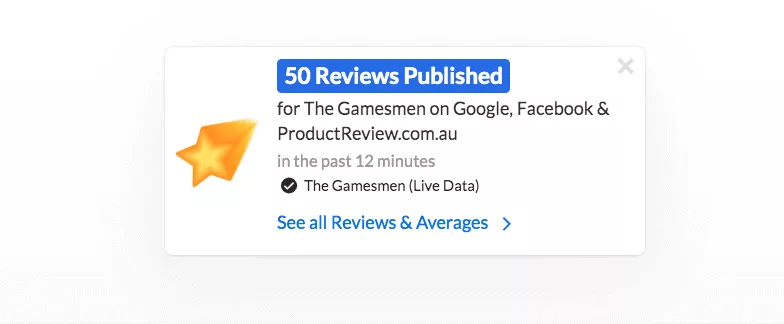
By placing hyperlinks to their ‘Reviews & Testimonials’ page on their ProveSource notifications, The Gamesmen increased its page views ten fold. And the byproduct? Google Analytics reported that customers who viewed this page had 83% higher conversion rates.
Sephora
Showing reviews and ratings
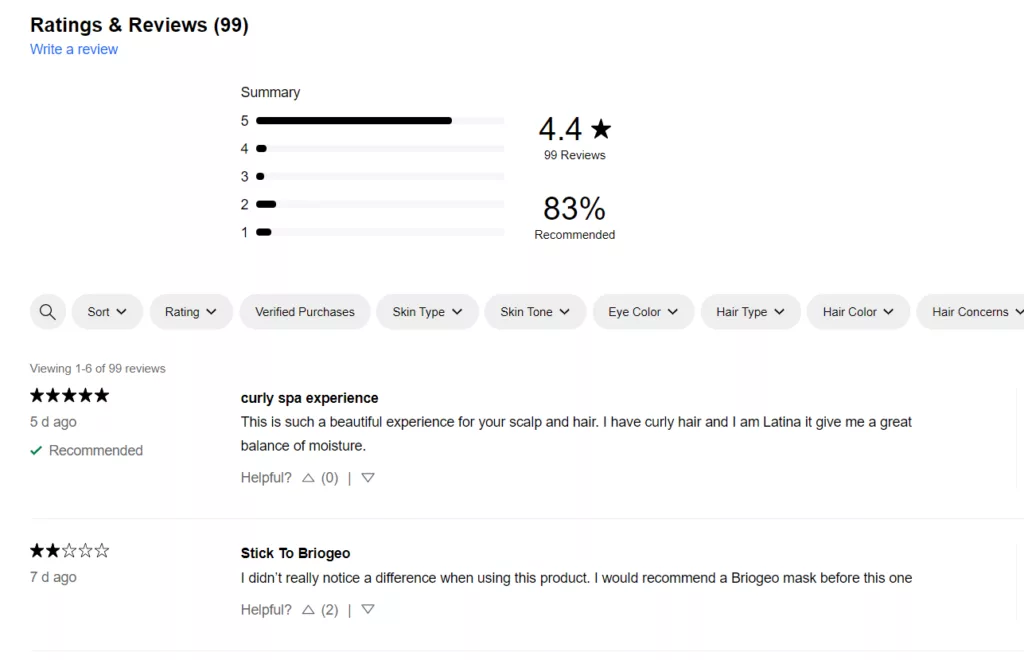
Customer reviews and testimonials are one of the strongest forms of social proof, and Sephora provides another incredible example of how they can be used.
On each individual product page, users can leave detailed reviews, give a rating of 1 to 5 stars, and other users can give a thumbs up to reviews that they find helpful. This way, even the reviews have a social proof element to them!
However, don’t be afraid of negative reviews. An INC article has mentioned that A few bad reviews won’t necessarily prevent people from buying your product. But if there are no reviews that mention your product’s flaws, consumers may become suspicious. They may even lose trust in the positive reviews that you choose to display.
How does scarcity and urgency drive sales?
Scarcity and urgency tactics utilize low-stock warnings or countdown timers to increase the perceived value of a product. By limiting availability, brands trigger loss aversion, prompting customers who are “on the fence” to purchase immediately rather than risk missing the opportunity.
Examples of Scarcity Tactics
ASOS
Uses “Low in Stock” labels on product pages. Instead of hiding low inventory, they highlight it to scream, “This item is popular and vanishing fast!”

Social Counter Social Proof Example
Need to promote your social channels from the website? Flex your online presence? ProveSource’s social counter allows business owners to show their number of followers, likes, or subscribers on social media platforms like Facebook, Twitter, YouTube, and Instagram.
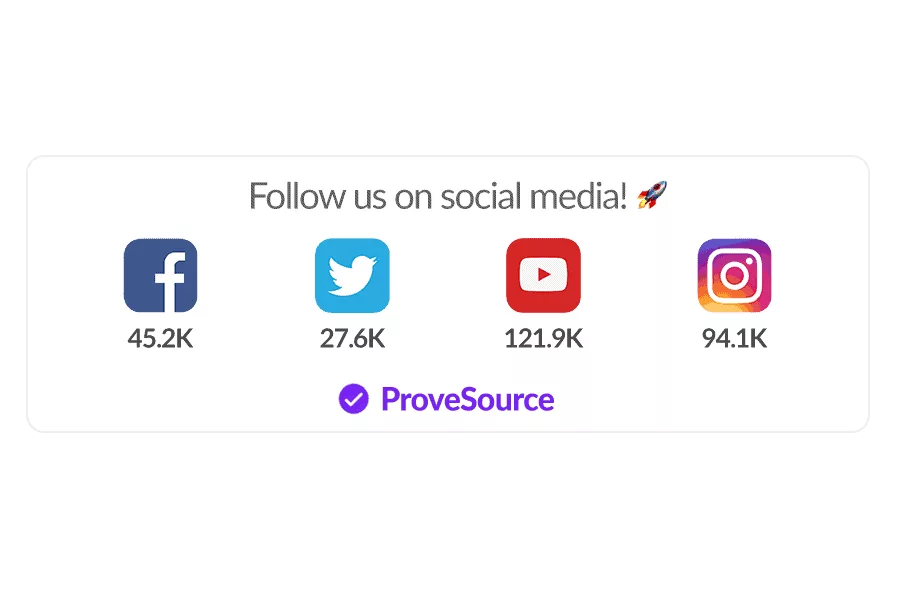
By seeing the numbers, users get a glimpse down another avenue of value, which is a community of like-minded individuals that they can engage with and relate to. That, in turn, fosters brand loyalty and continues to build your brand authority in the space – increasing a customer’s trust in you.
How do expert and celebrity endorsements influence buyers?
Expert and celebrity endorsements transfer authority via the “Halo Effect,” where the positive reputation of the endorser is psychologically transferred to the product. Experts build trust through competence (e.g., doctors, industry leaders), while celebrities build trust through aspiration and status.
Celebrity Example: Nespresso and George Clooney. The long-running partnership associates the coffee brand with Clooney’s sophistication and style.

Expert Example: Trilogy displaying the Allure Best of Beauty award. For customers unfamiliar with the brand, the award badge acts as a shortcut to trust—”If an expert panel vetted this, it’s safe for me to buy.”

Why are case studies considered powerful social proof?
Case studies function as “proof of concept” for complex or B2B products by detailing the specific problem, solution, and results of a past client. They go beyond simple praise to demonstrate exactly how a product delivers value, often answering the question, “Will this work for me?”
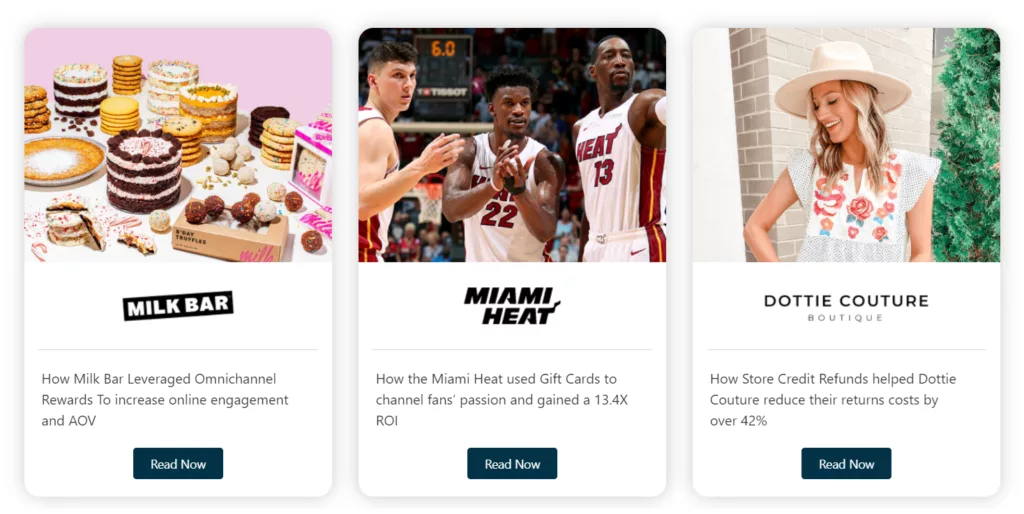
Best Practice: Rise.ai summarizes case study results in their headlines (e.g., “How X Brand increased revenue by 20%”). This allows users to grasp the value proposition without reading the full document.
Social proof marketing examples you can use to boost sales
Power in numbers
- “People who bought this also bought that”
- “These are our best-sellers”
- Bought by X amount of people
- “Served X number of customers so far”
- “Join others just like you who’re benefitting from this”
- Displaying the # of subscribers
- Displaying your # of followers
- Showing # of views
- Showing # of comments or engagements
- Displaying social media following
People’s choice
Experts:
- Awards
- Endorsements
- Publishing a press release
- Writing a blog post or technical paper about the experience
- Certifications
Celebrities:
- Presenting at a conference or event about the partnership
- Testimonials
- Endorsements
- Take over your social media for a day
- Post images of your product on social media
- Unpaid endorsements
Users:
- Reviews
- Ratings
- Testimonials
- Quotes
- Before and after photos
- Case studies
- Displaying clients’ logos
- Referrals
Scarcity and Urgency
- Low in stock
- X people have this product in their cart
- Only X units left
- X people have purchased this product in the last X hours
- X people are currently viewing this product
Self-promotion
- Ads
- Sponsored posts on social media
- About me pages
Conclusion
Social proof works because it leverages human psychology, making it easier to convince potential customers by showing them how others are already engaging with your product or service.
In this article, we went over a number of social proof examples used by popular websites and discussed what makes them work effectively to increase sales.
Additionally, we covered a list of ways to use social proof you can start implementing today on your own website.
Try out the examples above and see for yourself what type of results you can achieve. You can also use a free social proof tool like ProveSource that works out of the box for any website.
Ready to pair these tactics with a full CRO roadmap? Grab our conversion playbook for benchmarks, page-by-page optimization tips, and a 30-day testing plan that amplifies every social-proof win.
Frequently Asked Questions
What is the most effective type of social proof?
While effectiveness varies by industry, User-Generated Content (UGC) and Reviews are generally considered the most authentic. 60% of consumers view UGC as the most trustworthy form of content, often outperforming brand-created assets.
Does social proof work for B2B businesses?
Yes. B2B buyers face higher risks and scrutiny. Expert endorsements, trust badges (e.g., “Used by Google/Amazon”), and detailed case studies are the most effective forms of social proof for B2B, as they validate reliability and ROI.
Can negative social proof hurt my sales?
Yes. Displaying low numbers (e.g., “Join 5 subscribers!”) creates “negative social proof,” implying the product is unpopular. If your numbers are low, focus on qualitative proof like testimonials or expert reviews until your volume grows.
How do I display social proof without cluttering my site?
Use non-intrusive notification tools (like ProveSource) to show recent sales or sign-ups in the corner of the screen. Alternatively, place trust badges in the footer and testimonials directly on product pages near the “Add to Cart” button.